

Environment-oriented working and the SOM COMPASS
Today, organizations can only achieve their ambitions efficiently and effectively if they are granted the social space to do so. That is why a growing number of organizations are making an effort to work in a stakeholder-oriented manner. The SOM COMPASS helps to turn this into an organizational competency as well. After all, employees can only work in a stakeholder-oriented way if their organization supports them in doing so.
A new working method
The Netherlands faces major challenges, such as the energy transition, housing construction, ensuring water safety and quality, and peace and security. Within these challenges, no initiative can be undertaken without affecting the interests of third parties. Moreover, the challenges are interconnected and compete for space. In short, these are issues that are impossible for a single party or a few parties to solve. A ‘traditional’ focus on core tasks, growth, and compliance with laws and regulations has therefore become inadequate. This era requires organizations to work in an environment-oriented manner—not just the environmental managers, but the organization as a whole.

Stakeholder orientation
Environment-oriented working is a personal and organizational competency in which one's own objectives, and the activities directed toward them, are consciously shaped in conjunction with the interests of the environment. This means that an organization aligns its actions with the expectations, interests, and developments in its environment. It involves relevant stakeholders at the right time, acts transparently and reliably, and weighs the social and political context in its decision-making. In this way, an organization works not only toward a permitted future, but also toward a granted one.

The SOM KOMPAS
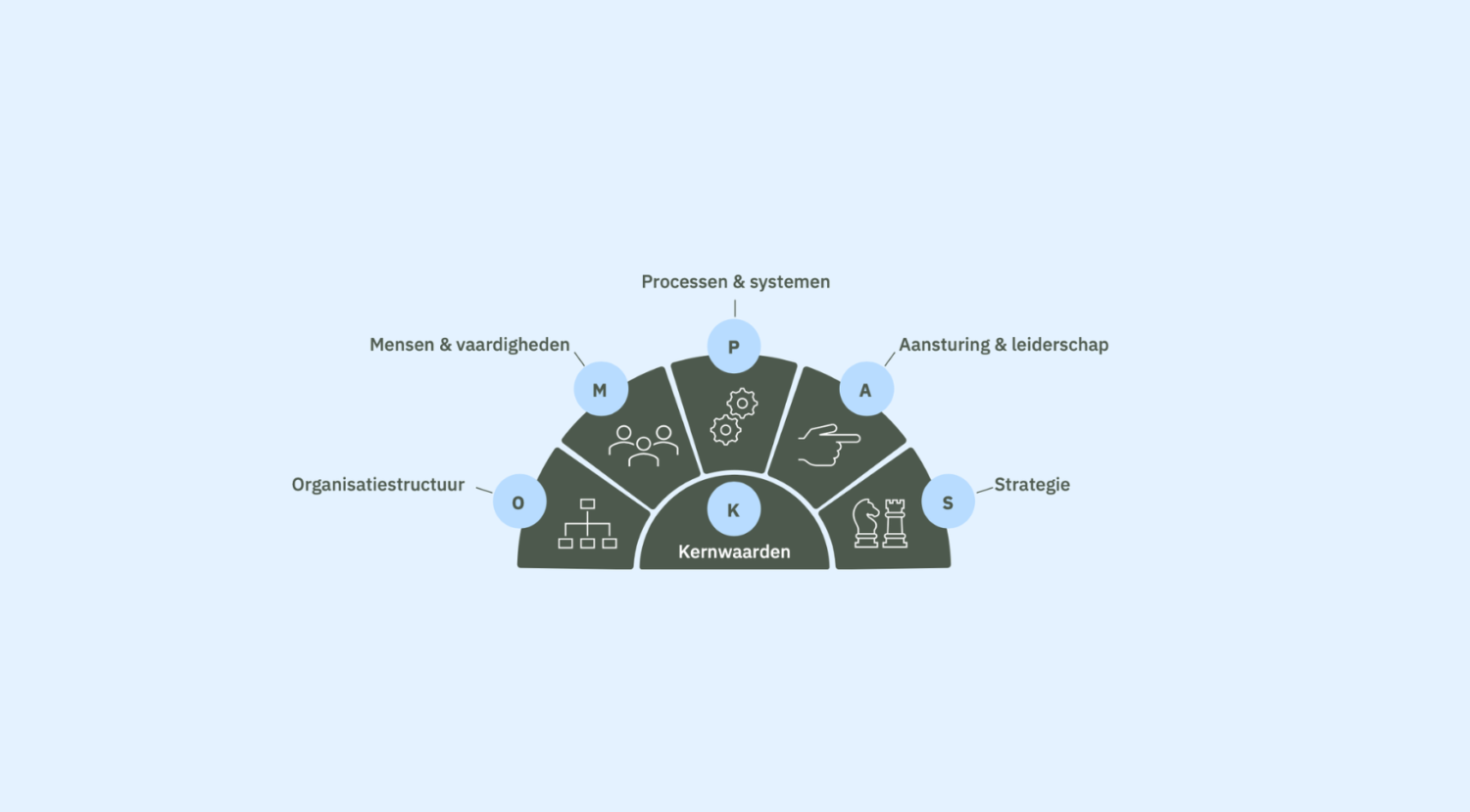
Embedding stakeholder-oriented working as an organizational competency is easier said than done. To help organizations with this, we developed the SOM COMPASS. The SOM COMPASS – consisting of six interrelated factors – enables us to arrive at a baseline measurement via an organizational scan: how stakeholder-oriented is the organization currently operating? The scan shows how well the internal environment is currently equipped to relate reliably and successfully to the external environment. Subsequently, the results of the scan form the starting point for choices regarding ambition, scope, and prioritization of the change agenda toward a more stakeholder-oriented organization.
Built for lasting success
But how do you approach that? Such a change initiative towards an environment-oriented organization? In the white paper Built for lasting success Robin and Jan-Pieter present a step-by-step route to make environment-oriented working an organizational competency using the SOM COMPASS.

Environment-oriented working in practice
Meet our team


Senior consultant
Robin Schram
Consultant
Jan-Pieter van de Weerd
Senior consultant
Eric van Vliet
Director, Co-founder
Marc Wesselink

Curious about how your organization can become more environment-oriented?
