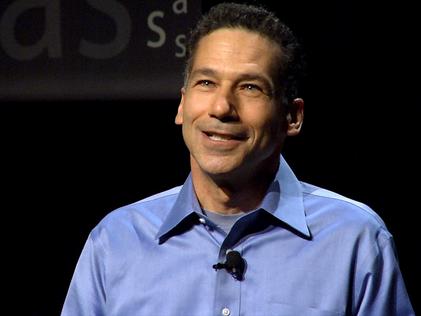
On Thursday evening, November 11th, the world-renowned negotiation expert William Ury was virtually in the Netherlands for a one-and-a-half-hour webinar benefiting the Abraham Path Initiative. Ury is a co-founder and honorary chairman of this initiative. You can find more about API here.
William Ury is the co-author of Getting to Yes that he wrote with Roger Fisher in the early 1980s. The webinar offered a wonderful opportunity for advocates of the Mutual Gains Approach to hear one of the founders of this approach speak about the development in his thinking since 1981. It turned into a lively Q&A session that is difficult to summarize in a single blog post. Nevertheless, we have summarized some of the evening's highlights below using a number of quotes.
“Negotiation, like walking, is walking side by side in the same direction.” The Abraham Path Initiative is, among other things, about walking. And what do walking and negotiating actually have in common? Quite a lot, according to Ury. For example, there's never a straight or even path, there are always obstacles you have to avoid, and ideally, for both negotiating and walking together, you walk side-by-side in the same direction.
“Am I an optimist or a pessimist? I'm actually a possibilist!” From his rich experience, Ury shared that he has seen firsthand how people, even in the most difficult situations, have the capacity to transform conflicts. Seemingly insurmountable problems can then appear to be solvable. Thus, much more is possible than one would initially believe.
“Looking back, Getting to Yes didn't go far enough!” Actually, a ‘mutual win,’ where both parties benefit from a negotiation, isn't enough. There's a third ‘win’ to be achieved, namely the benefit for the larger whole. Whether that's profit for the workplace, society, or the planet, we could afford to be a bit bolder in seeking solutions with the greatest possible added value for all parties. The ‘third win’ that works for everyone. That is, ultimately, the only truly sustainable solution.
“If you leave out significant stakeholders, they can become a blocking coalition that prevents you from reaching an agreement.” And therefore it is better to make these parties part of the negotiation and to also activate the ‘unseen allies’. Even in the most difficult, most complex negotiations (he mentioned, among other things, the abolition of Apartheid in South Africa and the negotiations with the FARC in Colombia), the greatest chance of success lay in a solution that works for everyone.
“The only way to deal with exclusionary forces is to include them.” Populism and fake news are contemporary trends that many people encounter. These often amplify societal problems and disguise them as insolvable issues, which in turn leads to great polarization. According to Ury, the solution lies in finding a common narrative that binds people together, in an inclusive way. In a polarized discussion, there are two types of groups: groups that exclude others and groups that try to include others. And paradoxically, the only way to win over the first group (people who exclude others) is to make them part of the process.
“A negotiator's most important asset is trustworthiness.” The most important quality of negotiators is their own reliability and credibility. Ury places the ability to build trust at the center of his narrative, the ultimate core competence. He illustrated this with a story about Lord Carrington.
And we also noted the following inspiring quotes:
“If you want to go fast in dealing with conflict, you’ve got to go slow.”
“We have to take care of people, because if we don’t, we all lose. And if we do, we can all benefit.”
“You have to strengthen your alternative if you want to equalize the power disparity.”
Are you curious about this webinar now too? It's entirely here to look back. Would you like to know more about the Abraham Path Initiative? The initiative has now also landed in Europe. For that website, click here.