Strategic Stakeholder Engagement: Practical Guide
- November 15, 2024
- min reading time
- Jeroen Medema
- Hans van Zijst
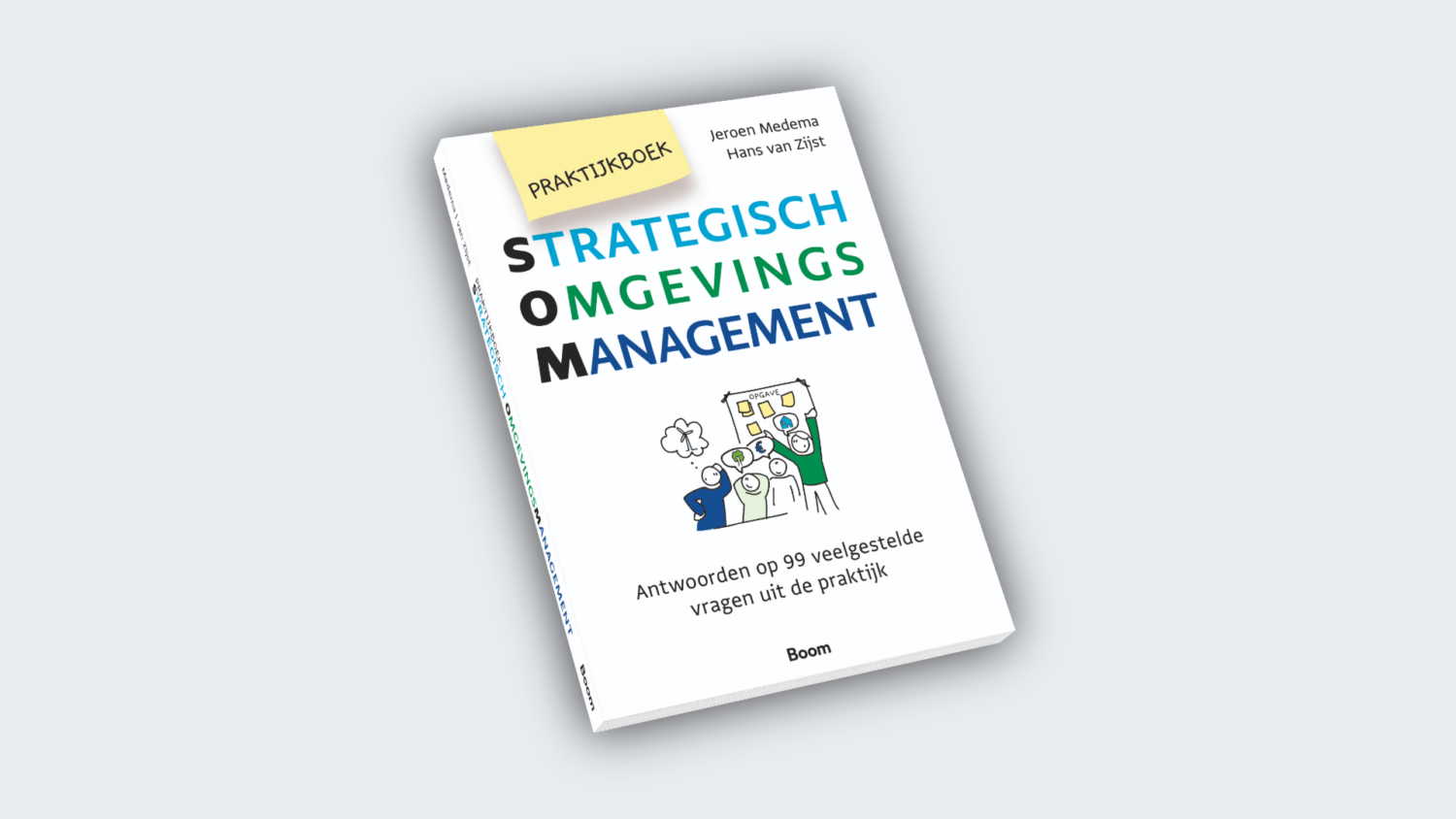
Solving societal issues has become more complex in recent years. This is partly due to the fact that we are increasingly faced with a wide range of stakeholders. Stakeholders who – often rightly so – demand attention for their own interests in various ways in light of the public task. At the same time, various societal trends are playing a role, such as polarization, the "me" culture, a decrease in trust in governments, scarcity of space, diminishing government effectiveness, and the role of social media in public debate. Strategic Stakeholder Engagement: Practical Guide aims to help professionals advance societal challenges.
It's therefore not surprising that we see intense discussions and rapidly escalating conflicts so often in society. Strategic Stakeholder Engagement (SSE) offers an effective approach to tasks where different stakeholders have different or even opposing interests. This practical book provides 99 answers to frequently asked questions about tackling societal issues with this method. The book regularly refers to supplementary material, such as forms, background literature, and case studies. Via convenient QR codes, templates and articles can be downloaded from the accompanying website. It thus forms a very practical addition to the Strategic Stakeholder Engagement Manual 2.0.
The book is available as both a hardcopy and an e-book. If you've read it, we're also very curious to hear your feedback! Feel free to send Jeroen a message via
jeroen.medema@wesselinkvanzijst.nl.
Videos
Is your book on its way, but do you want to start with some questions? Watch the videos below, which discuss both the basics of SSE and four questions from the book.
SSE with heart, head, and hands
Societal challenges are more complex than ever. Scarce space, significant interests, high tensions: stakeholder engagement professionals are confronted with them daily. The SSE approach offers a perspective for action. But before you get started, there's a more fundamental question that shouldn't be skipped: why are you doing it?
Author of the Handbook 2.0, Marc Wesselink, explains in this video that SSE is more than a method. It rests on a triangle of hands, head, and heart — and it is precisely this balance that determines whether SSE remains an active working method or becomes a trick bag. Because without intrinsic motivation, without connection and trust as a foundation, the method loses its power.
What do you do if your mandate proves insufficient?
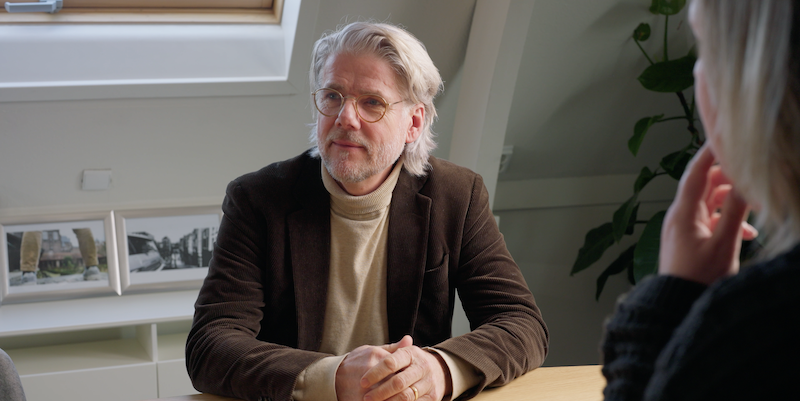
Negotiations sometimes take a turn that falls outside your mandate: the scope for a solution needs to be broader, but you don’t have authorization for that. According to Hans van Zijst, in that case, escalating the issue is not a sign of weakness, but rather a professional move. He discusses how to report back to your authorities, how to involve your own organization in the dynamics at the negotiating table, and why you should never promise more than you can deliver.
More challenging scenarios are also addressed: what to do if a broader mandate is refused, when to involve stakeholders to help realize a new mandate, and how an expanded mandate relates to your organization's BATNA. A practical in-depth look for anyone negotiating on behalf of an organization with significant interests.

What is the difference between positions, issues, and interests?
Language is an important tool for stakeholder engagement professionals. Yet issues, interests, and viewpoints are often used interchangeably in practice. This results in less sharp analyses and stalled negotiations.
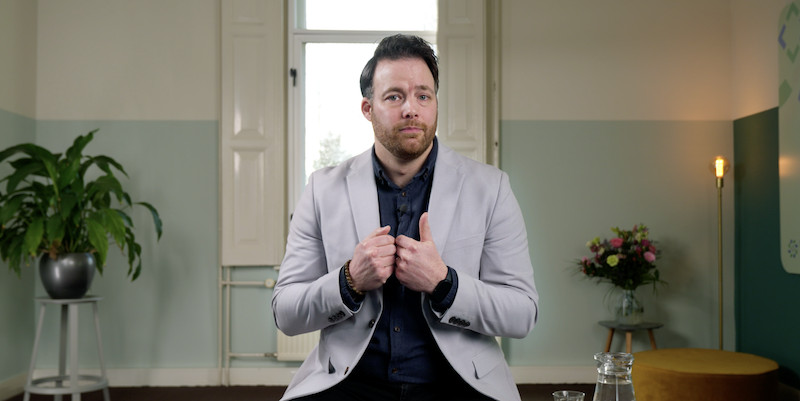
Jeroen Medema explains what distinguishes the three concepts, how you get from viewpoint to interest, why the "why" question is so crucial in this process, and how to phrase issues as concretely as possible. All small linguistic choices with major consequences for the quality of your analysis.
Is there a need for consensus on how to set up the dialogue?
When parties agree on how to work together, negotiations can focus on the substance. But in daily practice, consensus on the process isn't always achieved. What do you do then?
Hans van Zijst discusses how to remain true to the principles of Mutual Gains within legal frameworks, such as the Environment and Planning Act and the General Administrative Law Act, and internal organizational rules. It addresses what a good participation process requires from initiators and competent authorities, how to deal with stakeholders who are not at the table, and what to do when consensus is simply not achievable.

How do you formulate a ‘positive no’?
For many environmental professionals, saying ‘no’ is difficult. Yet, clarity is one of the most important tools for good expectation management. After all, a half-hearted response creates false expectations, and that undermines trust.
Jeroen Medema introduces the Positive No: a way to say "no" firmly and clearly without putting pressure on the relationship. Using a concrete example, he demonstrates how to apply this method and engage in a constructive confrontation.